
The Journal
The Rent Collection Gap Saudi Landlords Accept as Normal
Saudi residential landlords managing 20 to 150 units absorb late payments, slow vacancy detection, and renewal lapses as background noise. The yield gap compounds monthly and rarely appears on any report.
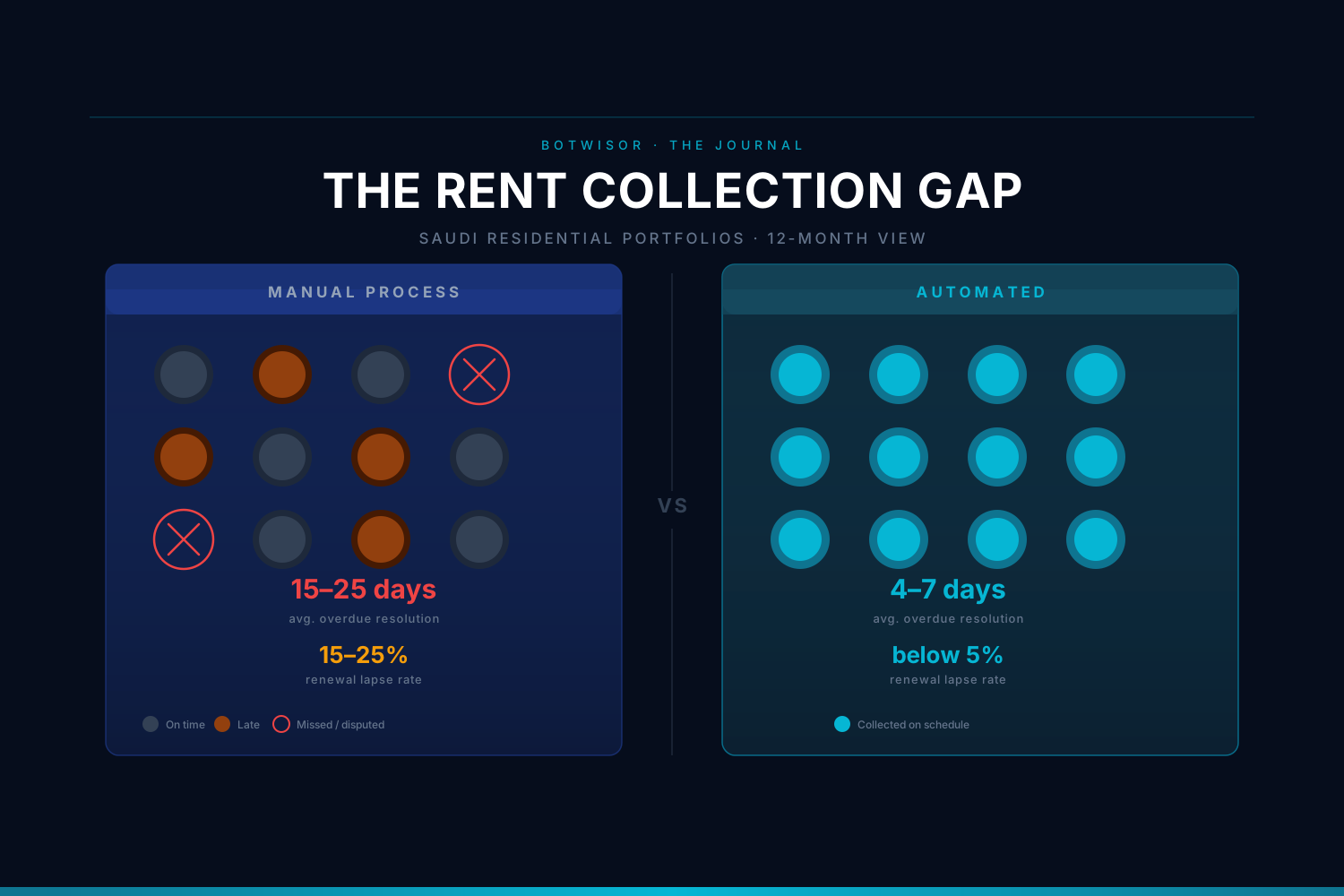
Saudi residential landlords managing 20 to 150 units absorb late payment cycles, slow vacancy detection, and renewal lapses as operational background. Each one compounds quietly every month. Together they represent a measurable gap between what a portfolio could collect and what it actually delivers, one that most operators have simply stopped noticing.
How Rent Collection Works Across a Saudi Residential Portfolio
Saudi residential landlords typically collect rent annually, semi-annually, or quarterly, often through post-dated checks or standing bank transfers. For portfolios under 30 units, a single property manager can track payments, vacancies, and renewals manually without much difficulty. Above that threshold, the volume of due dates, tenant communications, and documentation creates a coordination demand that most operators still handle through spreadsheets, phone calls, and WhatsApp threads.
The process appears manageable until something slips. A check bounces and the tenant is unresponsive for several days. A unit becomes vacant but the property manager does not visit for nearly two weeks. A lease expires and both parties continue the relationship informally while the renewal paperwork sits incomplete. Each of these events is a small operational gap, but at 60 or 100 units, they accumulate into a consistent yield drag that no single report captures.
Where the Manual Process Loses Ground
There are four points in the manual collection cycle where outcomes consistently fall short of what a structured process would produce.
Payment follow-up delays. When a rent payment fails to arrive by its due date, the property manager typically discovers it by reviewing bank statements, three to five days after the fact. The follow-up message goes to the tenant; there is a delay while they respond. If the check was post-dated and bounced, the resolution process stretches further. In a 60-unit portfolio with a 10% monthly late-payment rate, this means the manager is actively working six overdue accounts at any given point in the cycle while simultaneously handling maintenance requests and new tenant inquiries.
Slow vacancy detection. When a tenant leaves, a vacancy in a manually managed portfolio registers only when the property manager visits the unit or the next expected payment fails to arrive. The gap between actual vacancy and operational awareness is typically ten to eighteen days. During that window, the re-letting process has not started, the unit has not been inspected, and the property is generating no income. Across twelve to fifteen annual turnover events in a mid-sized Riyadh or Jeddah portfolio, that detection delay extends the overall vacancy period by a meaningful margin.
Renewal drift. Saudi residential leases commonly run for one year. When a lease approaches expiry, a manual process depends on the property manager or owner to initiate the renewal conversation at the right moment. That conversation is easy to deprioritize when maintenance calls and payment follow-ups are competing for attention. The result is that tenants frequently roll into month-to-month continuation on an expired contract, sometimes for several months. That informality creates documentation gaps, exposes the landlord to verbal commitments with no contractual basis, and leaves RERA registration requirements unaddressed.
Absent portfolio visibility. A landlord with 80 units across multiple buildings has no single view of collection status unless they build one manually by aggregating bank statements and manager reports. By the time that view exists, it reflects data that is a week or more old. Decisions about rent adjustments, re-letting timelines, and capex allocation get made against a picture that no longer reflects current reality.
Manual vs Automated: Where the Outcomes Diverge
| Collection Stage | Manual Approach | Automated Approach |
|---|---|---|
| Payment reminder | Sent by manager when they remember | Triggered automatically at configured intervals before and after due date |
| Late payment detection | Spotted on bank statement, 3 to 5 days after due date | Flagged same-day against payment schedule |
| Vacancy registration | Detected on manager visit or failed payment | Updated at tenant move-out; re-letting workflow starts immediately |
| Renewal tracking | Calendar note, actioned when manager gets to it | Alerts to tenant and manager at 60, 30, and 15 days before expiry |
| Portfolio dashboard | Assembled from bank statements and notes | Real-time view by unit: current, overdue, vacant, renewing |
| Average overdue resolution | 15 to 25 days past due | 4 to 7 days with structured follow-up sequence |
| Renewal lapse rate | 15 to 25% of portfolio at any given time | Below 5% with automated expiry alerts and digital renewal flows |
What the Gap Costs in Practice
Consider a 75-unit residential portfolio in north Riyadh, averaging SAR 44,000 in annual rent per unit. Annual rental roll: SAR 3.3 million. Turnover rate: approximately 20%, meaning 15 units change tenants each year.
The vacancy detection lag, estimated at 14 additional days per turnover event above what an automated process would produce, represents forgone rent of roughly SAR 1,690 per unit per turnover event. Across 15 annual turnovers, that is approximately SAR 25,000 in rent the portfolio does not collect, with no corresponding expense line to explain the shortfall.
The renewal lapse adds a different category of cost. Tenants on informal month-to-month arrangements who eventually vacate without formal notice can dispute security deposits, leave the RERA registration in an ambiguous state, and require legal engagement to resolve. A single contested handover case at this scale can cost SAR 10,000 to 20,000 in management and legal time, not counting the reputational effect on the landlord's ability to retain the property management relationship.
The late-payment drag is harder to isolate but still present. Consistent delays of 20 to 30 days across 7 to 10 units per cycle do not create a visible expense, but they affect cash flow timing that landlords managing multiple obligations, including property financing and maintenance reserves, experience in practice.
None of these costs appear on a property management report as line items. They sit inside aggregate numbers: total rent collected, vacancy rate, and days on market, all of which look acceptable in isolation but mask the gap when compared against what a better-run process delivers on the same asset base.
What Changes When Collection Is Automated
When payment tracking, reminder sequences, vacancy registration, and renewal workflows run through a connected system rather than a property manager's working memory, the gaps described above close without ongoing manual effort.
Payment reminders go out at configured intervals before due dates, reducing the proportion of late payments without a single phone call from the manager. Vacancies register at move-out, cutting the detection gap from days to hours. Renewal alerts reach both the tenant and the manager at 60, 30, and 15 days before expiry, reducing the probability of informal continuation to a small fraction of its manual equivalent.
The property owner gains something harder to quantify but operationally significant: a current, reliable view of their portfolio. How many units are collected, overdue, vacant, and approaching renewal is available at any moment without assembly work. That visibility supports faster decisions about pricing adjustments, capex timing, and re-letting marketing.
For operators managing multiple buildings across Riyadh, Jeddah, or Dammam, the efficiency gain also means the same management resource can handle a larger portfolio without proportional increases in staff, which directly affects the economics of portfolio growth.
Who Benefits Most from Addressing This
Rent collection automation produces its sharpest returns in a specific profile: portfolios between 30 and 200 units where the volume already exceeds what a single manager can handle reliably but where the owner has not yet formalized operations to the level of a full facilities management contract.
These are often family-owned portfolios that expanded organically over a decade, investor-grade assets held by smaller private equity vehicles, or waqf (endowment) properties managed by administrators who are accountable for yield but not equipped with modern collection tools.
Vision 2030's housing expansion program is increasing the residential supply across Saudi cities. As more landlords enter the market and managed-rental stock grows, the gap between operators who run collection predictably and those who do not will widen. The former will attract better tenants, post shorter vacancy periods, and compound yield over time. The latter will continue absorbing the gap as background noise, without being able to explain precisely where the yield went.
A structured review of your current collection workflows, set against your vacancy and renewal data, typically surfaces the yield gap within a single working session. Book a free automation audit and we will map your collection cycle from payment due date to resolution in one conversation.