
The Journal
Saudi Landlords Are Losing Rent to Fit-Out Approval Delays They Cannot See
Saudi commercial landlords lose 8 to 12 weeks of rent on each new tenant while fit-out approval requests move through inboxes with no owner and no deadline.
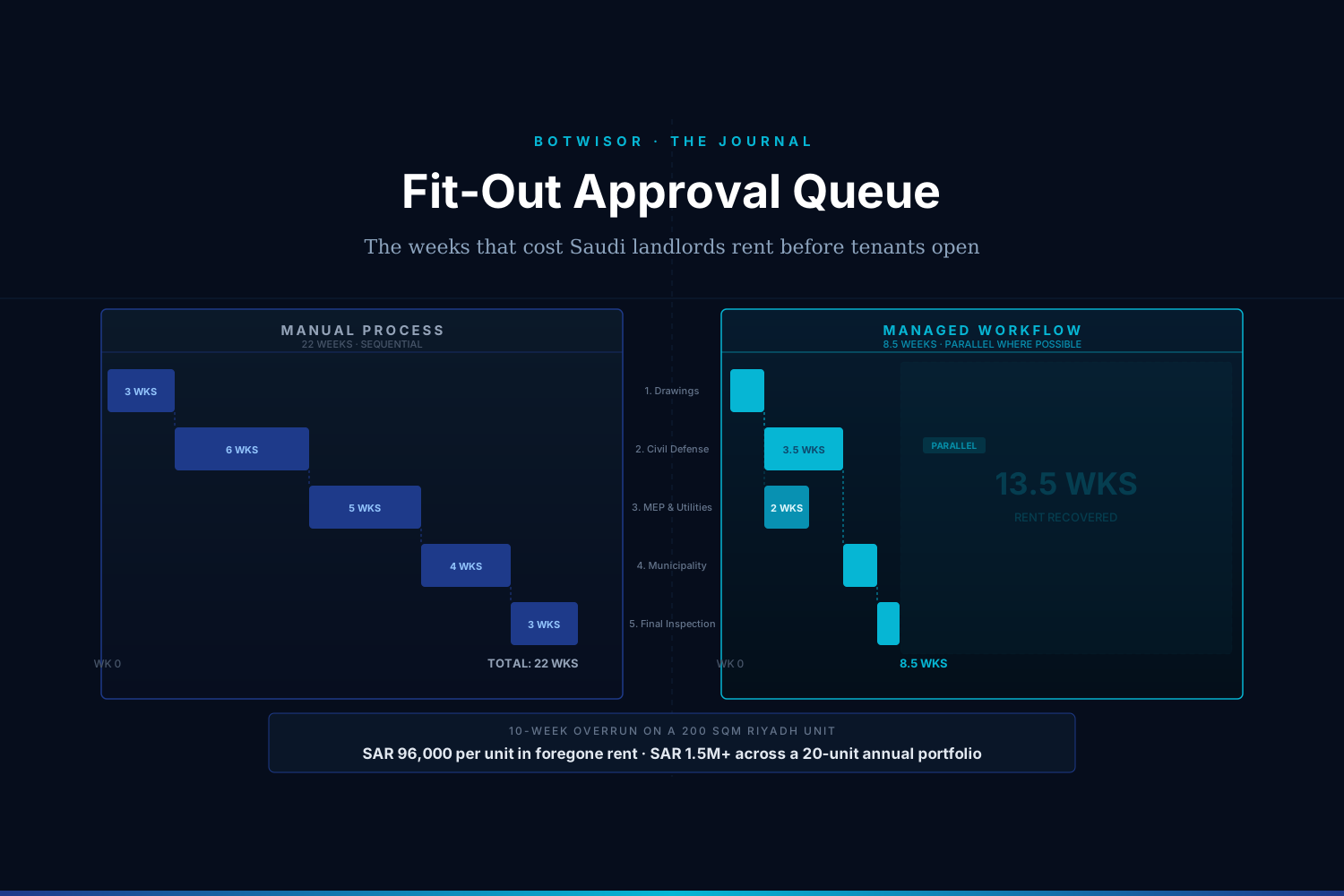
Saudi commercial landlords lose 8 to 12 weeks of rent on each new tenant because fit-out approval requests travel through email inboxes and WhatsApp threads rather than a managed workflow. The lease is signed and the unit is occupied, but rent does not start until the tenant opens for business.
The Fit-Out Window Saudi Landlords Undercount
When a commercial tenant signs a lease in Riyadh, Jeddah, or Dammam, the rent-free fit-out period begins. The landlord's team must approve the tenant's fit-out drawings, coordinate with civil defense for fire-suppression sign-off, loop in MEP consultants on utility connections, and confirm compliance with Balady municipal requirements.
Each of those approval tracks runs independently. The civil defense submission cannot proceed until the architectural drawings are cleared. MEP coordination cannot start until civil defense approves the fire-suppression design. The municipality inspection cannot be scheduled until MEP work is certified.
This sequential dependency means a delay at stage one cascades through every subsequent stage. When approvals travel by email, each handoff adds days: reviewers miss attachments, version control breaks down, approval requests sit in inboxes over the Eid break without a single automated reminder.
The agreed fit-out period in the lease might read "12 weeks." The actual time from drawing submission to unit opening is often 18 to 22 weeks on a complex retail unit. Saudi landlords absorb the difference as foregone rent.
Where the Queue Actually Builds
Most fit-out delays do not happen because tenants are slow. They happen because the landlord's approval process has no single point of accountability.
A standard Saudi commercial fit-out approval runs through five distinct stages:
- Concept and architectural drawings review. The tenant submits drawings and the landlord's property team reviews for brand guidelines, structural loads, and MEP zoning. If comments are routed by email, each resubmission cycle can take 10 to 14 days.
- Civil defense submission and approval. Coordinated through the landlord's nominated fire-safety consultant. Civil defense queues in Riyadh and Jeddah typically run 4 to 6 weeks for commercial fit-outs under current load.
- MEP and utility connection clearance. The tenant's MEP contractor must align with the building's utility capacity, and the landlord must confirm available load and issue a utility connection permit.
- Municipality fit-out permit (Balady). Required for structural or facade works. Processing timelines vary by district.
- Final inspection and key handover. The landlord's team does a snagging walkthrough and confirms the unit matches approved drawings before the tenant opens.
In a managed workflow, these stages run in parallel where dependencies allow, and each stage has a clear owner, a deadline, and an automatic escalation path when that deadline passes. In a manual process, each stage starts only when someone remembers to follow up.
Before and After: What Fit-Out Tracking Looks Like
| Stage | Manual process | Managed workflow |
|---|---|---|
| Drawing submission | Emailed PDF, acknowledged manually | Uploaded to portal, auto-acknowledged with version tracking |
| Comment routing | Email thread among 3 to 5 reviewers | Parallel digital review, comments consolidated in one view |
| Civil defense coordination | Consultant chases by phone | Milestone tracker flags approaching deadlines automatically |
| Resubmission cycles | 10 to 14 days per cycle | 3 to 5 days per cycle (all comments consolidated first pass) |
| Utility permit | Tracked in a spreadsheet, updated inconsistently | Auto-generated when MEP clearance is confirmed |
| Escalation | Verbal, when someone notices the delay | Automatic at 48-hour overdue mark with hierarchy escalation |
| Visibility for property team | Last email in a long chain | Real-time dashboard with days remaining per stage |
| Visibility for tenant | Sporadic updates on request | Portal access showing stage status |
The difference is not in the number of approvals required. Those are fixed by regulation and building practice. The difference is whether the workflow surfaces a delay within hours or only after weeks of silence.
The SAR Cost of a 10-Week Overrun
A single commercial unit in a prime Riyadh mall at SAR 2,500 per sqm annually, sized at 200 sqm, generates SAR 500,000 in annual rent. That is roughly SAR 9,600 per week.
A 10-week overrun beyond the agreed rent-free period, absorbed by the landlord as a goodwill concession or extended lease incentive, costs SAR 96,000 on a single unit.
Landlords with 20 to 30 commercial units turning over in a given year face aggregate delays in the range of SAR 1.5 million to SAR 3 million in foregone rent annually, with no visibility into which approval stage on which tenant's fit-out caused the overrun.
The cost compounds at scale. Mixed-use developments aligned with Vision 2030 retail expansion targets regularly bring 50 to 100 units online simultaneously. A portfolio-wide manual process at that volume means the property team is tracking 300 to 500 simultaneous approval actions, most of them through email.
What Changes When Approvals Move Through a Managed Workflow
Automation does not replace the human judgment that goes into reviewing a fit-out drawing or walking a civil defense inspection. What it eliminates is the operational overhead that fills the gaps between those judgments.
When a fit-out submission arrives, it is routed automatically to the right reviewer with the right deadline. When a comment is issued, it is consolidated before going to the tenant, so the tenant does not receive three separate email threads requiring three separate resubmissions. When a stage clears, the next stage triggers without anyone needing to notify the next party.
The property team's time shifts from chasing status to resolving genuine issues. A reviewer who was spending 40% of their week sending and answering status emails redirects that time to actual drawing review. Approval cycles that ran 10 to 14 days per round fall to 3 to 5 days because comments no longer queue in individual inboxes.
For large-format developments aligned with Vision 2030 targets in Qiddiya, Diriyah, and the emerging retail corridors in Riyadh's north ring, this is not a marginal operational improvement. It is the difference between meeting occupancy commitments to investors and missing them.
Vision 2030 and the Rising Stakes for Saudi Commercial Real Estate
Saudi Arabia's retail real estate pipeline is among the most active in the MENA region. New gross leasable area coming online through 2030 will require leasing teams to process fit-out approvals at a volume the current manual process cannot absorb.
RERA's push for greater transparency in real estate transactions increases the operational burden on landlords further. Documented approval timelines, version-controlled drawing submissions, and auditable sign-off records are becoming baseline expectations.
Landlords who build a managed workflow for fit-out approvals now gain a structural advantage: faster time-to-open for tenants, cleaner audit trails for RERA compliance, and a demonstrably shorter vacancy window that improves net effective yields for investors.
The Question Every Saudi Commercial Landlord Should Ask
At your last five fit-out approvals, do you know which specific stage caused the longest delay and by how many days? If the answer requires searching email chains, the process has already cost you more than you have measured.
Fit-out management rarely appears as a line item in a commercial property budget. But it accumulates, unit by unit, quarter by quarter, into one of the most controllable sources of revenue leakage in Saudi commercial real estate.
→ Book a free automation audit to map the approval stages in your fit-out process and identify where a managed workflow would cut your time-to-open.