
The Journal
When Saudi Landlords Calculate Deposit Deductions Without a Condition Report
Saudi landlords close tenancies without a standardized condition report, leaving deductions disputed and re-letting cycles longer than they need to be.
When Saudi Landlords Calculate Deposit Deductions Without a Condition Report
When a Saudi commercial or residential tenant vacates, the property manager typically walks the unit, notes damage on a phone, and proposes a deduction from memory or an informal checklist written sometime in the past. Without a standardized condition report covering move-in and move-out, every tenancy ending becomes a negotiation rather than a process, and the cost of that negotiation is one most landlords have never measured.
How Saudi Tenancy Endings Actually Run
The standard move-out sequence in Saudi commercial and residential leasing follows a recognizable pattern: the tenant gives notice, often by WhatsApp, a walkthrough is scheduled, damage is photographed or verbally noted, a deduction figure is proposed. The tenant counters. Both sides negotiate. Eventually a number is agreed, and the deposit (minus deductions) is returned.
This cycle typically runs three to six weeks from notice to final payment. For a landlord managing 20 or more units across Riyadh, Jeddah, or Dammam, that cycle runs continuously, absorbing operations staff time that could otherwise go to re-letting activity or maintenance coordination.
The process exists not because it is optimal but because no standardized alternative has been put in place. Most lease agreements registered on the Ejar platform imply a condition check at handover and return, but in practice the documentation is sparse, inconsistent, or entirely absent.
Where the Process Breaks Down
No Standard Inspection Form
Each property manager approaches the walkthrough differently. One sends photos to the tenant over WhatsApp. Another uses a spreadsheet template from several years ago that lists common damage items but has no weighting system and no connection to repair cost rates. A third documents nothing and relies on verbal agreement reached on the day.
Without a standard form, there is no shared baseline. Disputes arise not because landlords and tenants are dishonest, but because neither party documented the move-in condition in a way that maps cleanly onto a move-out inspection. The baseline was informal; the comparison is therefore subjective.
No Reference Rate Card for Repairs
Even when damage is properly documented, landlords often lack a pricing reference for common repair categories: repainting a room, replacing a broken fitting, servicing an HVAC unit, or resurfacing a scratched floor. The deduction amount proposed is an estimate, not a verifiable figure tied to actual costs.
Tenants who are commercially sophisticated, a retail brand in a mall or a corporate occupier in an office building, recognize this. They propose a lower counter-figure and request repair invoices to substantiate the landlord's claim. Sourcing those invoices takes another week, often after the tenant has already vacated the country or transferred most of the deposit funds from a different account.
Units Sit Idle During Disputes
The most direct cost is re-letting delay. While a deposit dispute is active, the landlord hesitates to commission refurbishment because the refurbishment cost bears on the final deduction figure. The unit sits empty during the negotiation.
A three-week dispute on a unit renting for SAR 15,000 per month represents SAR 11,250 in forgone income for that period alone, before counting the property manager's time spent in back-and-forth correspondence.
For a portfolio with two to four move-outs per month, this is a recurring, structural drain. It rarely appears in any report because it is categorized as "days to re-let" at best, and often not tracked at all.
What the Manual Process Costs
The costs fall into three categories, most of them invisible until a landlord builds portfolio-level tracking:
Operations labor. Handling a disputed deduction typically consumes three to five hours per tenancy cycle: collecting photo evidence, obtaining repair quotes, drafting counter-proposals, and following up with tenants or their representatives. At mid-market property management staff rates in Riyadh, that is SAR 600 to SAR 1,500 per dispute in direct labor cost, running continuously across the portfolio throughout the year.
Forgone income during extended voids. Every day a unit sits idle while a deposit dispute is unresolved is a day of revenue not earned. In the commercial and residential mid-market across Riyadh and Jeddah, the income impact compounds quickly across any portfolio of meaningful size. At occupancy levels typical of well-managed commercial properties, an extra two weeks of void per unit per year adds up materially against the operating income ratio.
Under-recovered deductions. Landlords without documentation routinely settle for less than the actual damage warrants because they cannot substantiate the full amount. The shortfall flows into the maintenance budget and is funded by the landlord rather than the tenant who caused the damage.
| Cost Category | Manual Process | With Standardized Condition Report |
|---|---|---|
| Move-outs with counter-proposals | Majority involve at least one push-back | Near-zero when both parties signed at move-in |
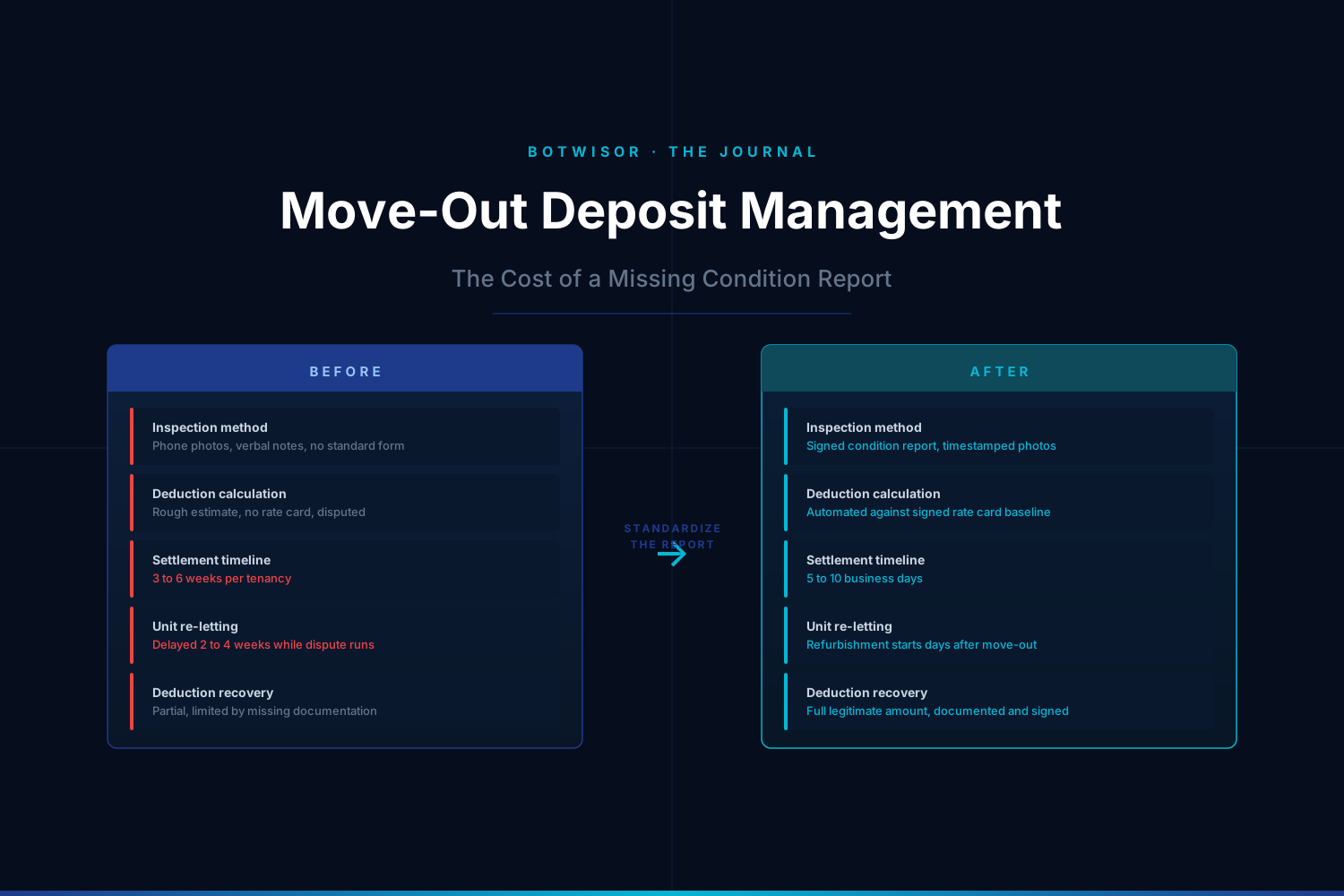
| Average time to deposit settlement | 3 to 6 weeks | 5 to 10 business days |
| Staff hours per move-out cycle | 4 to 6 hours | 1 to 2 hours |
| Additional void days from disputes | 2 to 4 weeks per unit | Days, not weeks |
| Deduction recovery rate | Partial, limited by documentation quality | Higher, backed by timestamped and signed evidence |
What Changes When the Process Is Standardized
A landlord operating with a standardized move-in and move-out condition report converts a negotiation into a calculation. Both parties walk through a standard checklist at move-in and sign it. Photographs are attached and timestamped. At move-out, the same checklist is repeated against the signed baseline. Differences are identified by comparison. A repair rate card applies documented costs to each flagged item. The deduction notice is generated within a day of the walkthrough, not a week later after three rounds of email.
Tenants who signed the move-in report have limited room to contest. Most deductions are settled within the first week. The unit goes to refurbishment immediately. Re-letting timelines compress.
The same process accumulates data over time: which unit types generate the most damage, which repair categories are underpriced in the rate card, which buildings require investment before the next tenancy cycle. None of that is visible from the current informal approach.
Why Saudi Landlords Accept This as Unavoidable
The move-out negotiation has become so embedded in Saudi residential and commercial leasing practice that many landlords treat it as an inherent feature of the market rather than a process failure. The Ejar platform improved lease registration and basic payment tracking but does not prescribe inspection standards at handover or return. Standard form leases reference a condition at tenancy commencement but do not specify how to document it or how to price repairs when they are needed.
This leaves a gap the market fills with informal negotiation. The landlord who operates with consistent, signed inspection documentation holds a compounding advantage: faster settlements, higher deduction recovery, shorter void cycles, and a data set that improves leasing decisions over time.
Saudi Vision 2030 ambitions are adding significant new residential and commercial supply across Riyadh, Jeddah, and Dammam through programs such as ROSHN and a range of private mixed-use developments. Landlords absorbing this new supply will not be able to sustain a manual negotiation model at scale. The ops burden per move-out grows with portfolio size; the informal process does not get cheaper.
The Next Move
Standardizing the move-out process does not require a long implementation project. The components are specific and bounded: a condition checklist matched to the portfolio's actual unit types, a repair rate card reflecting current labor and materials costs in the target markets, and a workflow that connects inspection records to deposit calculations and property management systems.
The landlords who build this now reduce a recurring, unmeasured cost while creating operational data that improves leasing decisions over time. Those who continue on the informal negotiation model are carrying a cost they have not yet quantified.
→ Book a free automation audit to see what a standardized move-out process would look like for your portfolio.