
The Journal
How Saudi Retailers Lose Campaign Budget Without Knowing Which SAR Worked
Saudi retailers spend millions on Ramadan and National Day campaigns yet cannot measure which channel drove each sale until weeks after the campaign closes. The attribution gap misallocates spend every promotion cycle.
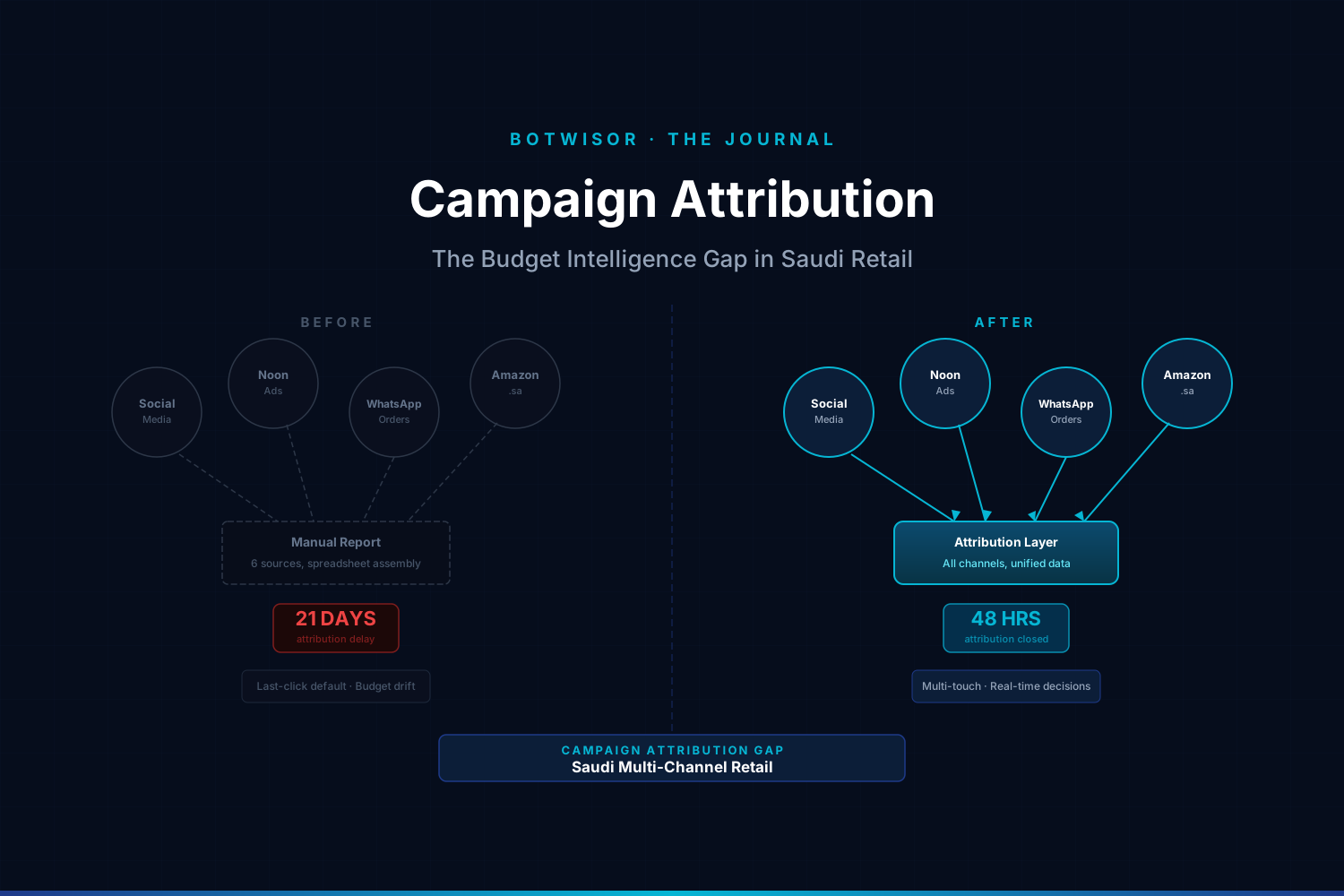
Saudi retailers investing SAR millions in Ramadan, White Friday, and National Day campaigns cannot measure which channel drove each sale until two to three weeks after the campaign closes. By then, budgets are committed to the next cycle. The attribution gap is not a reporting inconvenience; it is compounding misdirected spend every promotion cycle.
What Is the Campaign Attribution Gap?
Campaign attribution is the process of connecting each customer purchase back to the marketing touchpoint that initiated it. In a multi-channel Saudi retail environment, that path is rarely direct. A shopper might discover a product through an influencer on Instagram, compare prices on Noon, encounter a retargeting ad on Snapchat, and complete the purchase on the brand's Salla storefront three days later.
Without an attribution layer that connects these events, the retailer records the sale but cannot answer a basic question: which channel deserves credit, and in what proportion? More importantly, which portion of a SAR 600,000 Ramadan media budget actually drove revenue, and which 50 or 60 percent funded impressions no one acted on?
This gap exists not because attribution is technically complex. It exists because most Saudi retail operations still lack the automated data pipelines that close the loop in real time.
Manual Campaign Ops: The State Before Attribution Closes
A typical mid-sized Saudi retailer running a Ramadan campaign across Instagram, Snapchat, Noon Ads, and a branded website manages attribution by hand. The pre-campaign setup alone involves:
- UTM parameters built manually in a spreadsheet and appended to each ad creative and outbound link
- Separate dashboards for Noon Ads, Meta Ads, and Snapchat Ads with no shared data layer
- Website analytics on Salla or Shopify that captures direct traffic but misattributes multi-touch journeys
- A WhatsApp broadcast list that generates orders with no campaign tracking at all
During the campaign, the marketing team pulls daily spend numbers from each platform separately. Conversion data follows different latencies: Noon may report a confirmed sale two days after it occurs; affiliate networks take five to seven days to confirm. WhatsApp orders are tracked in a parallel spreadsheet.
When the campaign ends, a marketing analyst or finance manager spends two to three weeks reconciling spend from six sources against revenue from four channels. By the time that reconciliation report exists, the next campaign is already in planning. The data is treated as a historical reference, not a live decision tool.
The Real Cost: Reinvesting in Channels That Did Not Earn It
The late attribution report does not only arrive slowly. It arrives with a built-in structural distortion. Without multi-touch attribution, the last click receives full credit by default. In Saudi retail, the last click is typically a branded search or a direct-to-cart URL, which inflates the apparent ROI of channels the retailer already controls and reduces the measured value of awareness spend including influencers, Snapchat, and outdoor placements that actually initiated the purchase journey.
The consequence follows in the next campaign cycle: budget shifts toward the last-click channel, cutting the awareness layer that generates discovery. Sales soften. The retailer attributes the softness to market conditions rather than a measurement error. The cycle repeats.
| Dimension | Manual Attribution (Current State) | Automated Attribution (After State) |
|---|---|---|
| Time to close the attribution loop | 14 to 21 days post-campaign | 24 to 48 hours |
| Channel coverage | 4 to 6 platforms, manually reconciled | All channels in a single normalised data layer |
| WhatsApp orders | Spreadsheet entry, no campaign link | Captured via tracked links or QR codes |
| Multi-touch credit model | Last-click by default | Configurable: linear, time-decay, or data-driven |
| Budget reallocation window | Next campaign cycle | Within the live campaign window |
| Influencer performance visibility | Manually checked via affiliate links | Automated conversion matching |
| Data freshness | 48 to 72 hour lag per platform | Near real-time, hourly or daily syncs |
| Report build time | 10 to 20 analyst hours | Automated dashboard |
The Multi-Channel Complexity Specific to KSA
Saudi consumers purchase across a fragmented set of channels: branded own-sites, Noon, Amazon.sa, Salla-powered storefronts, and physical stores that may or may not feed into a unified POS. Each platform defines conversion windows differently and exports data in incompatible formats.
A campaign running simultaneously across these channels generates overlapping attribution claims for the same conversion. Without a single source of truth that ingests, de-duplicates, and normalises this data in near-real-time, every post-campaign report is a negotiation between vendor dashboards rather than an honest accounting of what actually performed.
What Automated Attribution Changes for Saudi Retailers
When attribution is automated, the feedback loop compresses from weeks to hours. A campaign manager running a National Day promotion can observe, while the campaign is still live, that Snapchat awareness spend is generating low-intent clicks while Instagram Story placements are converting at twice the average basket value. They reallocate SAR 40,000 of budget in real time. The campaign ends on a stronger result, not a softer one.
This is not a reporting improvement. It is an operational capability that determines which decisions are possible within the campaign window.
The compounding benefit appears across successive campaigns. Accurate attribution builds a channel model the marketing team actually trusts. Budget allocations shift toward verified performance rather than vendor claims or intuition. Each campaign launches with a tested understanding of what the KSA customer journey looks like for that specific brand, category, and season.
What stays the same: the creative work, the media relationships, and the platform strategy. Automation handles the data infrastructure so the team can make decisions instead of reconciling spreadsheets.
Why Saudi Retail Cycles Make This Urgent
Saudi retail does not distribute revenue evenly across the year. Roughly 40 to 50 percent of annual revenue in categories such as fashion, electronics, and home goods concentrates during Ramadan, the two Eids, and the National Day period. A retailer that misreads channel attribution during Ramadan and reallocates budget based on distorted last-click data does not recover that margin in a quiet August. The compounding cost from a single misread campaign cycle can distort the full annual plan.
Vision 2030 has accelerated the pace of new retail entrants across every category, increasing competitive pressure on customer acquisition costs. Retailers who can adjust campaign spend in near-real-time hold a structural cost advantage over those rebuilding attribution from spreadsheets after each promotion. In a market where customer acquisition costs are rising, accurate attribution is not a measurement luxury. It is a margin protection mechanism.
Saudi PDPL (Personal Data Protection Law) compliance adds a further dimension. Retailers collecting and processing customer journey data across platforms need to do so within an auditable, governed architecture. Manual cross-platform exports assembled in spreadsheets are harder to audit and govern than a structured attribution pipeline that handles data retention and consent rules by design.
What the After State Looks Like
A Saudi multi-channel retailer operating with automated attribution runs its next campaign at a different level of precision. Budget decisions are possible the day after launch, not three weeks after it ends. Influencer performance is visible within 48 hours of a first conversion. The allocation between Noon Ads spend and own-site spend adjusts based on live conversion data, not platform sales pitches.
Finance receives a clean, reconciled attribution report within 48 hours of campaign close. The marketing team is not spending a third of its capacity rebuilding reconciliation from raw exports.
The business question shifts from "did this campaign make money?" to "which SKUs, which channels, and which customer cohorts do we double down on next cycle?" That shift in the quality of the question is what separates retailers growing market share in Saudi Arabia from those defending existing margin.
Book a free automation audit to see where your campaign data architecture is leaking budget before the next promotion cycle.